🧠 AI Is My Mike Ross: Partnering with AI in My Engineering Workflow
From engineering to reefkeeping to designing an apparel line, AI is my ever-eager sidekick. Like Mike Ross from Suits, it remembers everything and moves fast—but still needs mentoring, guardrails, and a filter. Here’s how I use AI to build, think, and grow—without losing my voice along the way.
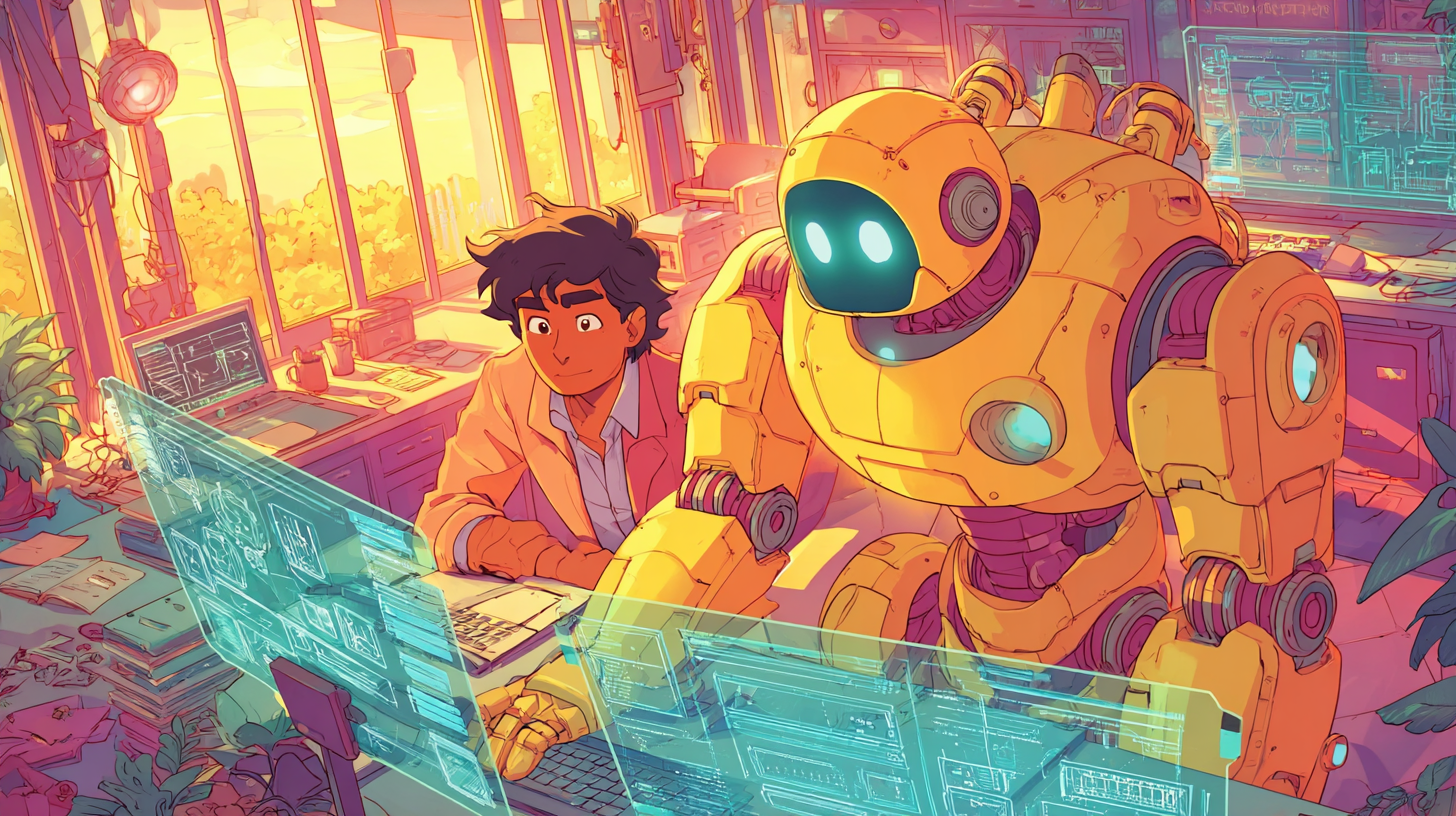
If you’ve ever watched Suits, you know Mike Ross—the guy who read the bar exam book once and never forgot a single word. He could out-argue seasoned lawyers, draft a motion from memory, and pull obscure precedents out of thin air… except he wasn’t technically a lawyer.
Working with AI feels exactly like that.
It knows a lot. It moves fast.
And when it’s right, it’s brilliant.
But when it’s wrong?
It’s confidently wrong—like “tanked your production environment” wrong.
Still, I keep coming back to it. Not because I want a replacement. But because I’ve never had a more capable partner—one who needs just the right mentoring, guidance, and healthy skepticism to shine.
🟢 The Pros: Why AI Feels Like a Superpower
We’re past the hype. This isn’t “the future.” It’s right now—integrated into how I build, create, plan, parent, eat, exercise, and think.
👨💻 In Engineering:
- 🧠 Instant Recall
There’s something magical about asking a question and getting a well-formed, complete, human-readable answer in under 5 seconds.
Syntax, command-line flags, RFCs, Git commands, obscure DSL quirks—AI remembers what I’ve forgotten and surfaces things I didn’t even know to ask for. - ⚡ It’s Fast. Like, Unreasonably Fast
Boilerplate? Done. Regex? No sweat. Swagger annotations? Documented and validated. Annoying unit tests? Easy peasy.
What once took me 15 minutes to look up, double-check, and debug now takes seconds—leaving me more time to focus on what actually matters. - 💡 Idea Generation at Scale
I use AI to riff. Explore design patterns. Compare libraries. Reconsider architectures. When I’m stuck, it helps me break inertia. When I’m moving, it helps me refine. It’s a creative partner that doesn’t care how many dumb ideas I throw at it. - 📚 From 0 to Expert (Faster Than You Think)
Whether I’m exploring new tools, catching up on best practices, or re-learning something I haven’t touched in years, AI is like having the collected wisdom of every engineer who’s ever posted to Stack Overflow, Reddit, Medium, or Hacker News—without the condescension.
🌱 In Life:
- 🐠 Reef Keeping
You ever try diagnosing coral melt while Googling five Latin names, testing magnesium, and squinting at algae under blue LEDs? AI has helped me troubleshoot, identify, and balance my tank chemistry better than most reef forums I’ve lurked on for years. - 💾 Replacing Cloud Services With My Own NAS
Built a NAS, migrated to Nextcloud, replaced Dropbox, Google Drive, iCloud, and more—all with AI helping me configure Linux, SMB shares, permissions, snapshots, Plex, and a dozen other things. It even gave me cable management tips. - 🍳 Cooking with AI-Gordon Ramsay
Sometimes I ask it to answer like Gordon Ramsay. Sometimes like Gino D’Acampo. It's an interactive cooking show. It makes me laugh. It makes me eat better. It even remembers dietary preferences (when prompted nicely). - 💪 Health, Fitness, Mental Clarity
Structured workouts. Sleep tracking strategies. Intermittent fasting guidance. Attention-deficit-friendly task breakdowns. AI doesn’t just help me work out—it helps me keep going when motivation is nowhere to be found. - 🧵 Designing My Own Clothing Brand
It’s helped with everything from name ideas and visual branding to AI-assisted design prompts, Shopify customization, Printful integration, product descriptions, and ad copy. It’s not just a creative tool—it’s a business partner that doesn’t take equity. - 🎁 Holiday Gifting & Planning
Gift lists for everyone in my life. A gifting plan that takes impact, fairness, and budget into account to curate the best Christmas morning. Custom card ideation. Even holiday itineraries. I just type what I’m feeling, and it helps me turn it into something thoughtful.
🛠️ How I Actually Use It (Every Day)
Here’s where AI shows up in my workflows:
| Area | How I Use It |
|---|---|
| Frontend/Backend Dev | Scaffold features, write validation logic, fix error messages, generate unit/integration tests |
| Docs & Communication | Draft READMEs, PR descriptions, internal memos, technical blog posts |
| Strategic Planning | Roadmaps, pros/cons, tooling comparisons, even pitch decks |
| Personal Projects | Research, config, troubleshooting, naming, domain hunting, branding |
| Parenting & Home Life | Meal planning, kid activity ideas, morning routines, dog care tips |
| Creative & Emotional Support | Design prompts, journaling exercises, writing support, "Talk me through this feeling" moments |
✨ The Secret Sauce? Instructions.
The biggest unlock? Learning how to prompt.
If you’ve ever asked ChatGPT something and thought, “Meh, that’s mid,” there’s a good chance the problem wasn’t the answer—it was the question.
Instructions make the difference between “generate lorem ipsum” and “write a landing page for a productivity app targeted at overworked parents who want to build side projects in peace.”
And here's the kicker:
AI will help you write better prompts to get better answers from it.
That’s recursive clarity. And it’s addictive.
💬 Bonus: Navigating Social Niceties with a Translator
I don’t like corporate politics.
I don’t like sugar-coating.
I don’t like pretending the house isn’t on fire just because someone called a meeting to review “marshmallow toasting protocols.”
But I also know that brutal honesty isn’t always productive.
So I use AI like a translator.
It takes what I want to say—glass and all—and helps turn it into something people can actually digest.
You attract more bees with honey.
I still don’t understand why anyone wants to attract bees, but if that’s the game… AI helps me play it without getting stung.
⚠️ The Cons: What AI Can’t Do (Yet) — And What It Can Undo
For all the power, you’ve got to keep your guard up. Here’s what I’ve learned the hard way:
- 💭 Hallucinations Are Real
AI will make up functions, dependencies, entire APIs, or cite docs that don’t exist—and do it confidently. You have to double-check. - 🕳️ It Doesn’t Know Your Context
Your company’s standards. Your team’s legacy code. Your manager’s whims. AI is oblivious to all of it. Sometimes it gives you the perfect answer for the wrong world. - ⚠️ Over-dependence Is Sneaky
I’ve had moments where I looked at code I wrote and thought, “Did I come up with that, or did AI?” And that’s a little scary.
Because if you're not careful, you stop learning and start delegating growth.
It’s easy to feel powerful when you're enhanced—but is it still meaningful when the work doesn’t feel earned? - 🎭 Personality Dilution
AI can write in your voice—but it can also replace your voice. It can smooth your rough edges into blandness. Be careful not to let it file you down too much. - 🧂 The Salt Filter Is Required
AI is a fountain of ideas—but you still need to be the filter. Otherwise, it’s just noise with good grammar.
⚠️ The Con: The Illusion of Expertise
AI is an incredible amplifier. But amplification works both ways.
Give it a thoughtful engineer and it can accelerate insight.
Give it someone with shallow understanding and it can accelerate confidence.
That’s where things get weird.
Suddenly product managers feel like engineers because they generated a working snippet of code.
Executives believe they can replace mature products with a weekend prototype.
People start solving interesting problems that have absolutely nothing to do with the real problem.
The tool produces something that looks impressive, and the human brain fills in the rest of the competence.
But building software that works once is very different from building software that survives:
- scale
- security
- edge cases
- maintainability
- operational reality
Those are the things that keep engineers busy for years.
AI can help write the first draft.
It cannot magically grant the experience required to know what the second draft should look like.
And when people mistake the first draft for the finished system, hubris creeps in.
At that point AI becomes less like Mike Ross and more like an episode of The Boys.
Everyone suddenly has powers.
Very few people have the wisdom to use them.
🧠 AI Won’t Replace You. But It Will Reflect You.
And maybe that’s the scariest part.
If you give it laziness, it’ll reflect that.
If you give it vision, it’ll elevate it.
If you come in curious, it’ll expand your thinking.
If you come in insecure, it’ll flatter you into complacency.
Use the tool. Don’t become the tool.
Let it speed you up—but not define you.
Let it support your voice—but not erase it.
Let it sharpen you—but don’t forget how to cut without it.
🏁 Final Thought
I use AI every day. To build, to learn, to write, to cook, to live.
I use it like a partner—one who’s always there, always eager, and just needs a little mentoring and a healthy dose of side-eye.
AI won’t make you Harvey Specter.
But if you know how to mentor it, it might just be your Mike Ross.
And maybe, if you’re lucky, that’ll be enough to win your case—and still leave room to grow on your own.