🗡️ Arise, But At What Cost
Solo Leveling made the Necromancer class change look like a cheat code. Leadership’s betting your engineering org on the same fantasy — minus the ending Sung actually got. 🗡️
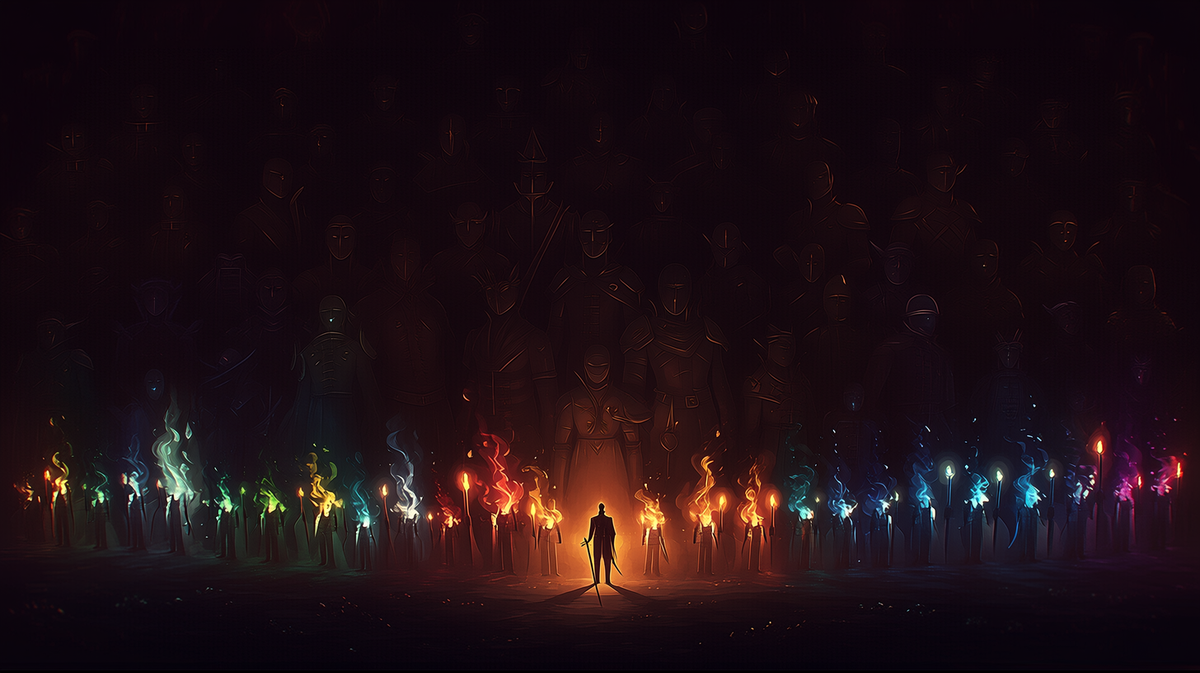
Before we dive in: this post assumes you've watched Solo Leveling through the end of Season 2. Full spoilers for Sung Jin-Woo's arc, including the ending. If you're not caught up, bookmark this and come back — the shadow army isn't going anywhere.
For everyone else: Solo Leveling follows Sung Jin-Woo, the weakest "Hunter" in a world where monsters spill out of dimensional Gates and only people with awakened powers can fight them. Sung starts as the literal bottom of the leaderboard — E-rank, disposable, the guy other hunters bring along to die first. Then he gets a mysterious system upgrade that gives him the ability to upgrade himself and eventually turn him into a Necromancer: he can raise the enemies he kills as permanent shadow soldiers who fight for him. By the end, he's not just strong. He's commanding an army.
"What do you plan to do with all this power?"
— Chairman Go Gunhee, to Sung Jin-Woo
That's the question Chairman Go asks Sung after watching him casually solo threats that should've required a raid party. Sung doesn't really have an answer. He thinks and shares his intention of starting his own guild, where he’ll likely keep soloing gates with his low-level friends anyway.
This scene reminds me of how leadership describes our agentic AI rollout like it's a class change cutscene.
Because that's exactly the pitch, isn't it? You used to be a Fighter — grinding STR, AGI, VIT, and PER one commit at a time, capped by how many hours you personally have and how fast your fingers move. Now you're a Necromancer. You don't need to be the strongest unit on the field anymore. You raise an army. Every agent is a shadow soldier with a job — one does frontend, one does test coverage, one does that Jira ticket nobody wanted — and you, the engineer, just became the commander. Intellect over individual grind. Scale over sweat.
It's a great story. I loved every episode of it. I also don't think we should be building engineering orgs around it.
Some parallels:
Class change (Fighter → Necromancer) = Individual contributor → Agent orchestrator
Shadow soldiers = Deployed AI agents
Mana pool = Compute budget / API spend
Arise command = Prompt / task delegation
Chairman Go's question = The question nobody in leadership is actually asking
🧙 The Necromancer Class Change
Here's the seduction, stated plainly: you stop being the unit and become the commander of units.
In engineering terms: instead of writing every line yourself, you spin up agents to write the boilerplate, run the tests, refactor the module, chase down the flaky CI failure. You're not grinding XP one PR at a time anymore. You're allocating.
What it looks like
- 🧟 Spin up an agent per workstream, each with a narrow job description
- 🎯 You define the objective, the shadow army executes
- 📈 Velocity metrics go up because something is always running
- 🧠 Your value shifts from "can you code" to "can you delegate and review"
The upside
It's real. I've watched agents burn through scaffolding work that used to eat a junior engineer's entire sprint. The shadow army analogy holds up better than most AI metaphors precisely because Sung's shadows aren't generic — each one keeps the skills and rank it had in life. That's not a bad model for specialized agents. Some of you have a testing shadow. Some of you have a documentation shadow. Fine.
The tension
Sung didn't get his army for free, and neither do you. Every shadow extraction costs mana. Every agent run costs compute, review time, and — the part nobody puts in the roadmap slide — your attention when it goes sideways. The class change isn't a cheat code. It's a different grind wearing a cooler jacket.
👑 We Don't Actually Understand the System
Sung's powers come from something called "the System" — a mysterious interface that assigns quests, grants stats, and occasionally almost kills him with punishment quests he didn't fully understand the terms of. He uses it constantly. He does not understand how it works. Neither does anyone else in the show, including, eventually, people who should.
In other words: sound familiar?
We are running production engineering orgs on models whose training data, failure modes, and internal weightings are opaque to the people deploying them. We see the immediate benefit — faster PRs, more shadows raised — and we treat that as sufficient evidence that the System is benevolent. Sung got lucky. The System, as it turns out, had a plan for him that mostly worked out. That's fiction doing fiction things. Betting your engineering org's trajectory on "the black box has historically been nice to us" is not a strategy, it's a prayer with a Slack integration.
Stay suspicious. Stay skeptical. The System granting you a power spike is not the same as the System being on your side.
⚔️ Sung Is Not a Role Model
This is the part that gets cut from the leadership deck entirely: Sung's rise is not clean. He lies to his family for most of the series. He makes calls that get people killed or sidelined so he can keep growing. He accumulates power in ways that make other hunters — legitimately powerful, legitimately accomplished people — irrelevant almost overnight, through no failing of their own except bad timing.
The show doesn't really punish him for this. That's the fantasy. Real orgs don't get that pass.
Nobody is talking about the mid-level engineers who did nothing wrong except get good at exactly the wrong decade. Nobody is talking about what "efficiency gains" mean for the people whose specific, hard-won skill just got automated into a shadow. If your AI strategy has a body count of careers and you're describing it with the same triumphant music as a leveling montage, that's not vision. That's just violence with better branding.
🔋 Mana Isn't Infinite (And Neither Is Your Bottleneck)
This is the section leadership really doesn't want to hear, so I'll say it slowly: more shadows does not mean more effective.
Sung's mana pool grows, sure — but slowly, and he's constantly chugging potions with diminishing returns just to keep the army fielded. Commanding shadows isn't passive. He gives them simple instructions and it mostly works, until it doesn't, and then he has to personally intervene because the shadow army executed the letter of the command and missed the point entirely.
Replace "mana" with compute budget. Replace "potions" with the token spend you're quietly increasing every quarter to keep throughput from degrading. Replace "Sung has to personally intervene" with the part where a senior engineer spends their afternoon untangling what four agents did to a codebase because none of them had the context to know they were solving the same problem three different ways.
The reality drift
- 🧟♂️ Shadow army scales headcount, not judgment
- 🕰️ Every agent still routes back through a human bottleneck for review, integration, and "wait, why did it do that"
- 💸 The mana cost doesn't disappear, it just moves from "engineer hours" to "compute spend" and "orchestration overhead"
- 🎯 Leadership can't solve the bottleneck by adding more shadows any more than Sung could solve a leadership gap by raising more grunts
An army is not a multiplier. It's a management problem wearing a costume.
🏰 The Guild Sung Never Needed
Here's the detail everyone skips past on the way to the hype reel: after Chairman Go asks Sung what he's going to do with all this power, Sung starts a guild — and then keeps soloing gates with his same low-level friends anyway.
The most powerful hunter alive, sitting on an army capable of clearing anything, still shows up to do the work personally, with the people he trusts, at a scale that actually makes sense to him.
That's not a plot hole. That's the whole point the show almost makes and then gets distracted from with another boss fight. Power doesn't obligate you to maximize its use. Sometimes the right move with a shadow army is to not deploy it for everything, and go do the work that still needs a person who actually understands what's happening.
Final Thought 💭
Everyone wants to be Sung Jin-Woo. E-rank to Monarch, montage included, mysterious System doing the heavy lifting while you level up in your sleep.
But the real question was never "how do I get the power." It's the one Chairman Go actually asked: what are you going to do with it, and what did it cost to get there?
I loved every second of Solo Leveling. I've got Season 3 marked on my calendar like everyone else. But I'd rather watch Sung raise an army of shadows from a couch than actually run one — because in the show, the mana cost is a plot device. In our org, it's a budget line, a burnout risk, and a headcount decision that has somebody's name on it.
Arise, sure. Just don't skip the part where you ask what you're arising for.


