Move Fast and Break Everyone
I spent 20 years building the tools that were supposed to save us. Instead, I think I helped build a circus. This is the confession part.
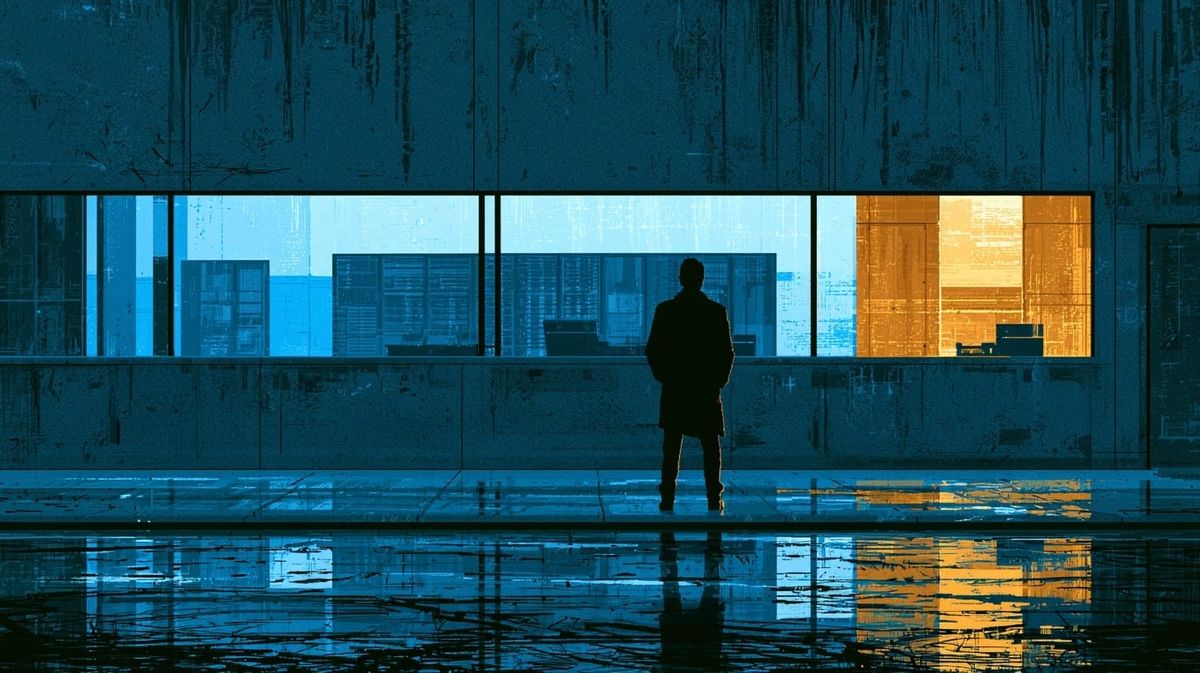
Every tool I've ever shipped was a hammer.
I just didn't know, until later, how many people were nails.
I know this reads as bitter. It is. Twenty-some years in this industry will do that to you if you're paying attention. So let me say up front: this isn't a thinkpiece. This is me, standing in the wreckage of a career I loved, trying to figure out what I actually built.
🖥️ The Ride I Was On
I found the internet in a high school library, on WebCrawler, in the late 90s. It felt like the entire world had just handed me a key. I believed that, sincerely, the way you only can before you understand what a key is actually for.
Then I watched the whole ride from the front car:
- 🚀 The dot-com boom, minting millionaires out of napkin sketches while I was still in college
- 📱 The iPhone, handing app development to anyone with a laptop and a bad idea
- ☁️ SaaS and dev frameworks, packaging entire infrastructures into something you could rent by the month
- 🎥 Social media and the influencer economy, turning everyone into a broadcaster
- 🤖 AI, the culmination of all of it — the tool that promises to do the trick every previous tool only gestured at
Each one felt like liberation while it was happening. Each one, in hindsight, was a delivery mechanism. I just couldn't tell yet for what.
💰 The Wealth Never Trickled. It Compounded.
Here's the part that keeps me up: every one of those waves made somebody rich, and it was rarely the person doing the work the wave was built on top of.
The generations who caught the early waves — real estate, dot-com equity, the first SaaS exits — built wealth on infrastructure that doesn't exist anymore and then, largely, forgot that infrastructure was the reason. Tech didn't cause that forgetting. But tech industrialized it. It gave that generation an amplifier, a demographic-targeting engine, and a content pipeline built specifically to feed people the version of reality that confirms what they already believe. We didn't just fail to redistribute the gains. We built the machine that convinces people redistribution was never owed in the first place.
And the generation on the other end of that machine — the one growing up now — is, by the numbers, the first to be worse off than the one before it. Educationally. Financially. Psychologically. Not "worse off, allegedly." Worse off, measured.
I have a son. I watch him grow up glued to a screen in a way I never was at his age, and some nights I genuinely don't know how much of that is the world he was born into and how much of it is the code his father helped write. I don't know the answer. I'm not sure I want to.
🎪 The Circus Replaces the Craft
I left graphic design for engineering because it felt like a conversation. Small teams, fast feedback, building something people actually used and actually liked — that was the whole appeal. It felt like craft.
It doesn't feel like that anymore. It feels transactional. Everyone's playbook is the same three moves: climb the ladder, cash the stock, or build the thing that gets you acquired by one of five companies that already own everything. The goal quietly shifted from make something good to make something exitable, and nobody sent a memo announcing the change — it just happened, deal by deal, cap table by cap table, until the room full of people who wanted to build something useful became a room full of people optimizing for the term sheet.
We didn't set out to leave society behind. But that's the shape it took — financially, with billionaires measuring their worth against nations; physically, with a space race that looks a lot less like exploration and a lot more like an exit strategy; politically, in every decision that treats other human beings as a line item to be cut.
The spirit didn't die all at once. It got outbid.
🔬 We Always Turn the Wheel Into a Tank
"Now I am become death, the destroyer of worlds."
We had the chance to build unlimited clean energy and instead built two bombs and called the body count a peace treaty. That's not ancient history — that's the template. Give us something genuinely world-changing and we will, with impressive consistency, find the version of it that can be pointed at someone.
AI is just the newest wheel we've turned into a tank. Data centers metastasizing across communities that didn't ask for them, conveniently justified by whichever crisis is loudest that quarter. A fourth tech bubble inflating in plain sight while regulators watch and take notes for a report no one will read. A wave of manufactured competence — hubris with an API — where confidence has quietly decoupled from actual understanding, and nobody in the room seems bothered by the gap.
The over-reliance worries me more than the technology itself. It reminds me of watching someone pour years into leveling up a digital avatar while the real person behind the keyboard quietly atrophies. We're doing that at civilizational scale now. Outsourcing the thinking, keeping the credit.
👿 What I Actually Did
I'm not writing this from the outside.
I built features that used what we know about human psychology to keep people scrolling a little longer than they meant to. I helped train the models — through code, through prompts, through every "this is helpful" click — that are now quietly aimed at the labor market my son will eventually enter. I beta tested the tools. I gave the feedback. I was, in every sense that matters, in the room.
I'm not going to pretend that makes me a villain. I didn't invent venture capital or behavioral psychology or the incentive structures I was hired into. I was one engineer, in a very large machine, doing what the machine asked. But I stopped pretending a while ago that "I was just doing my job" fully covers it. It doesn't. Not to me, anyway. Maybe that's not rational. It's how I feel.
🤡 The Circus
We had the pieces to build a better society. The talent, the capital, the tools, the reach — all of it, sitting right there.
We built a better circus instead.
Brighter lights. Louder music. More rings running at once than anyone could ever watch. And underneath the tent, most of us — me included — mistook the applause for meaning.
I don't know yet if that's a tragedy or just a season. But I know which one it feels like tonight.


