Part 2: The Evolution of Engineering Governments
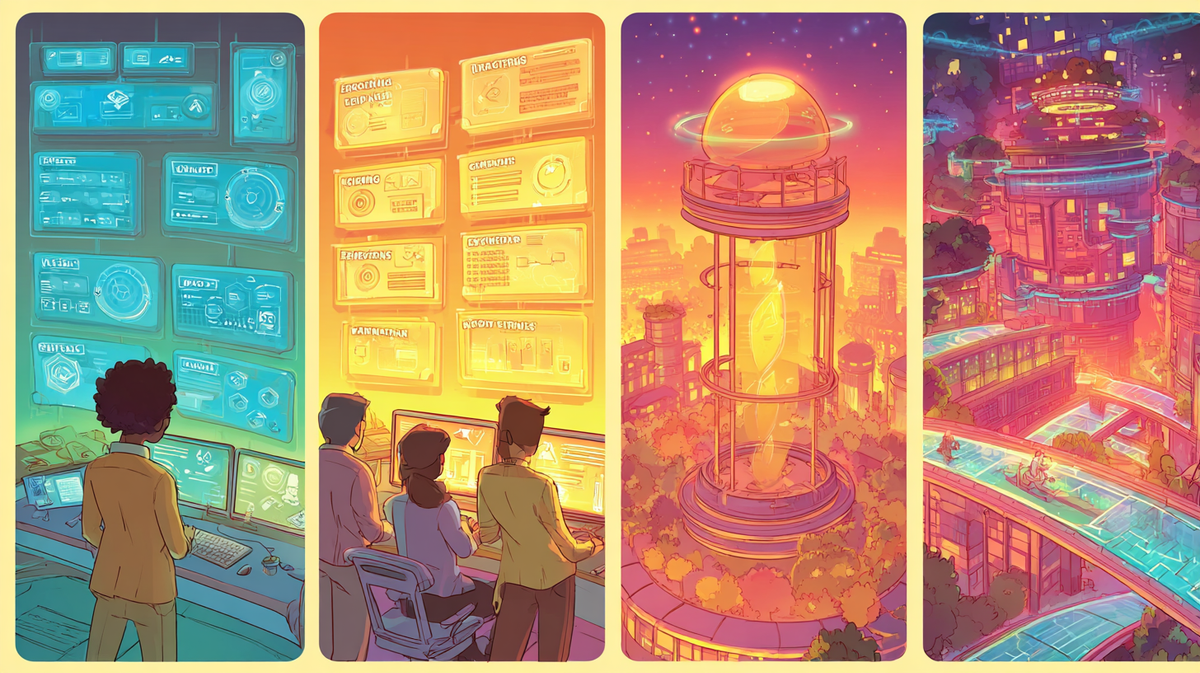
Engineering teams don’t stay politically stable. Startups begin in anarchic chaos, evolve into technocratic systems, and often end in bureaucratic process empires. Like civilizations, engineering organizations drift over time—and rarely in the direction people expect.
If you watch engineering organizations long enough, you start noticing something strange.
They evolve.
Not in a clean, deliberate way like architecture diagrams suggest. More like an ecosystem. Teams form, power structures emerge, processes appear, and eventually the organization starts to resemble something very different from what it originally was.
Most companies don’t realize this evolution is happening.
But if you’ve been around a few engineering orgs, the pattern becomes hard to miss.
Stage 1: Startup Anarchy 🏴☠️
In the beginning, there are almost no rules.
Everyone touches everything. The same engineer might deploy infrastructure in the morning, fix a frontend bug in the afternoon, and push a database migration before dinner.
Architecture decisions happen in Slack threads. Deployments happen whenever someone remembers to run the script. If something breaks, whoever understands it fixes it.
It’s chaotic, but it works.
In fact, this stage often produces surprisingly elegant solutions. There’s very little ceremony, so engineers focus on solving real problems instead of navigating systems.
The downside is obvious though. As the system grows, the chaos compounds.
Eventually the team realizes something uncomfortable:
The system only works because a handful of engineers understand everything.
That’s when the next stage begins.
Stage 2: The Rise of the Technocracy 🧠
As the company grows, expertise starts to organize itself.
People begin to specialize. Certain engineers become the experts in infrastructure. Others own the frontend architecture. Others deeply understand data pipelines or internal tooling.
Ownership appears.
Services get boundaries. Documentation starts to exist. Patterns emerge.
This stage often produces the healthiest engineering environments.
Decisions are made by the people closest to the problem. Engineers trust each other’s expertise. Systems begin to stabilize without slowing down too much.
Many great engineering cultures live here for a while.
But growth introduces a new problem.
Coordination.
Stage 3: Platform Socialism ⚙️
Once enough teams exist, shared infrastructure becomes necessary.
Someone has to maintain CI pipelines. Someone builds common libraries. Someone provides tooling so teams don’t reinvent the same authentication system for the tenth time.
This is where platform teams emerge.
Done well, this stage is powerful. Shared infrastructure reduces duplication and raises the productivity of the entire organization.
But it also introduces a subtle tension.
The more centralized the platform becomes, the more teams begin to feel constrained by it.
If you’ve ever heard engineers complain about “platform mandates,” you’ve witnessed this stage in action.
Still, this model can scale surprisingly far.
Until something else appears.
Stage 4: Bureaucratic Democracy 🏛️
Eventually the organization becomes large enough that coordination requires process.
Architecture review boards appear. RFC processes become formal. Deployment gates are introduced. Compliance checks are added.
None of these processes are malicious. Most were created to solve real problems that appeared earlier in the company’s growth.
But over time they accumulate.
Decisions that once took a conversation now require documentation, approvals, and meetings. Engineers begin spending more time navigating systems than building them.
You start hearing phrases like:
“We need to align with the process.”
Or worse:
“That’s how we’ve always done it.”
At this stage, the engineering organization begins to resemble a government bureaucracy more than a group of builders.
But the story doesn’t end there.
Stage 5: The Slow Decline of the Empire 🏚️
Eventually something begins to change.
The organization becomes risk-averse. Innovation slows. Engineers stop proposing bold ideas because navigating the system to implement them is exhausting.
The best engineers start leaving.
New hires inherit layers of systems they didn’t design and processes nobody fully understands.
Technical debt accumulates.
People begin spending more time managing the system than improving it.
And the irony is that everyone can feel it.
You hear things like:
“We used to move so much faster.”
But nobody is quite sure how to return to that earlier state.
Because the systems that slowed things down were all introduced for good reasons.
What Usually Happens Next 🔁
At some point the pressure becomes too great.
A new leadership team arrives. A major reorganization happens. A new architecture initiative begins. Someone declares the need to “return to engineering fundamentals.”
Suddenly the organization starts removing layers of process.
Platform systems get simplified. Teams regain autonomy. Engineers are encouraged to build again instead of navigating approval chains.
In other words, the empire begins to reset.
And the cycle quietly starts again.
The Hidden Insight
If you step back far enough, something interesting becomes clear.
Software architecture often gets blamed for complexity.
But most complexity in systems doesn’t come from code.
It comes from the organization that produced it.
Engineering teams don’t just build software.
They build governments that produce software. 🏛️💻
And like every government in history, those systems rise, expand, accumulate rules, and eventually struggle under their own weight.
The real art of engineering leadership isn’t stopping this evolution.
It’s recognizing where you are in the cycle…
…and making sure the empire doesn’t collapse before the next generation of builders has a chance to reshape it.