🎭 Role-Playing Archetypes of Engineers (Stranger Things Have Happened)
Engineering teams are like RPG parties: tanks, mages, rogues, and healers all working together. Here’s how I think about engineer archetypes — and why I lead like a Raid Leader, not the hero. 🎮✨
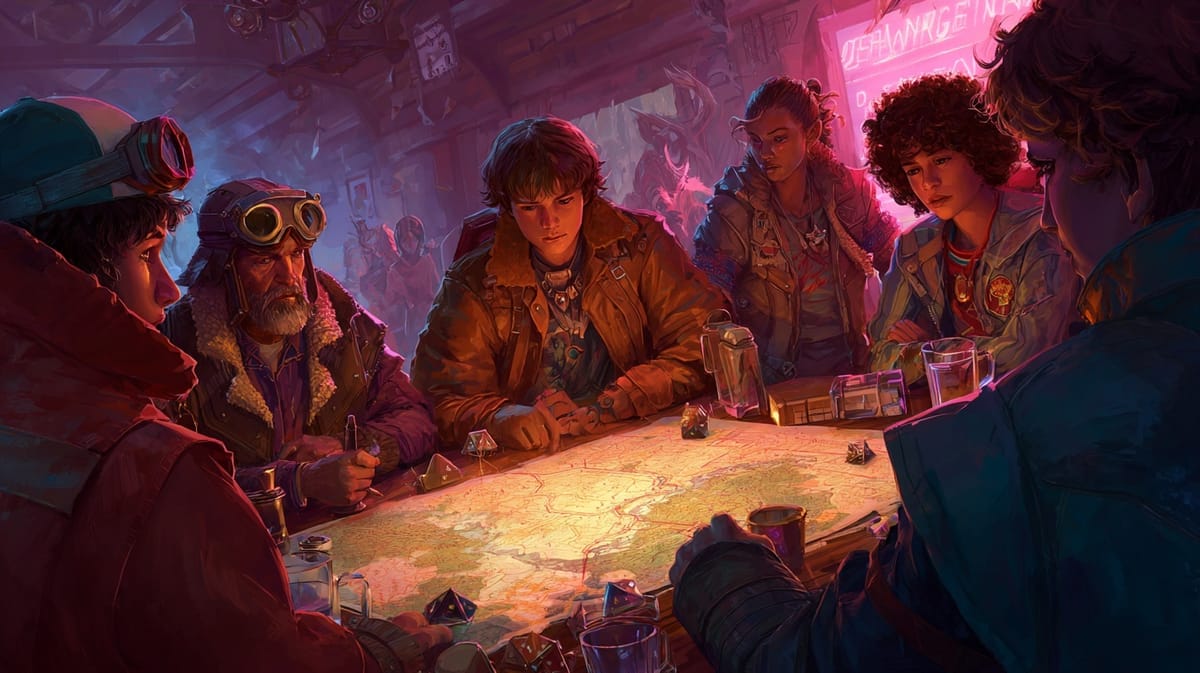
Engineering teams are a lot like adventuring parties. Everyone brings their own strengths, styles, and quirks. Some are tanks, others are DPS, some keep the group alive, and some are off soloing side quests (hopefully productive ones 😅).
If you’ve ever watched Stranger Things, you’ve seen it:
a group of friends huddled around a table, rolling dice, battling monsters in a Dungeons & Dragons campaign.
Each character plays a class — the tank, the rogue, the mage — and together, they take on impossible odds.
Engineering teams? Honestly, they’re not much different.
I often think of my leadership style like being a Raid Leader:
I’m not here to top the charts — I’m here to set the strategy, balance the team, and make the calls that keep us alive.
It’s about knowing the fight, understanding each player’s strengths, and helping the team win together.
Funny thing is, engineering work itself mirrors role-playing mechanics more than we realize:
- Campaign = Product roadmap
- Quest = Jira ticket
- Sprint = Dungeon run
- Boss fight = Release or critical bug
- XP = Hard-earned experience
- Skill tree = Career path
- Gear = Your tooling & stack
And just like in a good RPG, the best teams are balanced — you need more than one kind of player in your party.
Here are some of my favorite “engineering classes” I’ve seen on real teams:
🛡️ Warrior (Tank, Frontliner)
Takes on the gnarliest tech debt, the legacy code nobody wants to touch, the critical-path features that need brute force and resilience. They shield the team from instability and clear the path forward.
🗡️ Rogue / Ninja
Moves fast, prototypes, finds clever shortcuts, slices through small problems before anyone else notices. Often solo-minded but highly effective. Not big fans of heavy process.
🔮 Wizard / Mage
Masters of their domain. Can conjure architecture patterns or optimizations that seem like magic. They make the impossible possible — but their spell books (documentation) can sometimes be hard to read.
✨ Healer / Support
Keeps the team alive and healthy. Builds tools, writes documentation, mentors new hires, reminds the team to take breaks. Their impact is often invisible but absolutely essential.
🌿 Druid
Shapeshifters who can handle frontend, backend, ops — whatever the team needs. Adaptable, flexible, ready to fill in gaps and smooth over edges.
🏹 Ranger / Hunter
Autonomous bug hunters, scouts of new tech, solo side-questers who bring back powerful knowledge to the team. Great at exploring the unknown.
⚔️✨ Paladin / Guardian
Defenders of quality. Uphold standards, tests, and best practices. Will fight to prevent regressions or cut corners. Sometimes seen as “the code police” — but teams are better for having them.
🛠️ Artificer
Loves building automations, pipelines, and tools that help the team go faster. The go-to person when you need a build system or a clever workflow.
☠️ Necromancer
Keeps the ancient systems running. Understands the forgotten APIs. Can resurrect old codebases that everyone else fears to touch. Every company has one. Or desperately needs one.
🧘♂️ Monk
Minimalist, clean coder. Seeks simplicity and elegance. Cuts away the unnecessary. Leads by example — often the quiet wisdom of the team.
🎵 Bard
Boosts team morale. Makes standups fun. Keeps retros healthy. Checks in on well-being. Their social and emotional leadership is glue for the team — even if they never write a line of code.
🎯 Why I Lead Like a Raid Leader
A good Raid Leader doesn’t carry the team — they coordinate it.
They know the fight ahead.
They study the mechanics.
They build the right party.
They keep morale up.
And they make sure no one Leroy Jenkins into a disaster before the group is ready.
In engineering, I try to do the same:
- Set the environment and expectations
- Make the mission clear
- Balance roles and personalities
- Guide through strategy, not micromanagement
- And make sure tools like sprints, Jira, and meetings actually serve the mission
Final Thoughts
Every engineer can level up in different ways — vertically (deeper specialization), horizontally (broader skills), or even into hybrid classes.
Teams are stronger when they celebrate and balance different archetypes.
And leaders are stronger when they stop playing the hero and start leading the raid — building the comp, keeping things on track, and helping the whole party succeed.
If Stranger Things taught us anything, it’s that when the Demogorgon shows up — you better have the right party. 🛡️✨