Severance and the Pandemic Workplace: We Were All Innies for a While
The pandemic didn’t just give us remote work — it gave us our “outie” selves back. So why are companies so desperate to put us back in the office? Maybe it’s not about collaboration. Maybe it’s about control.
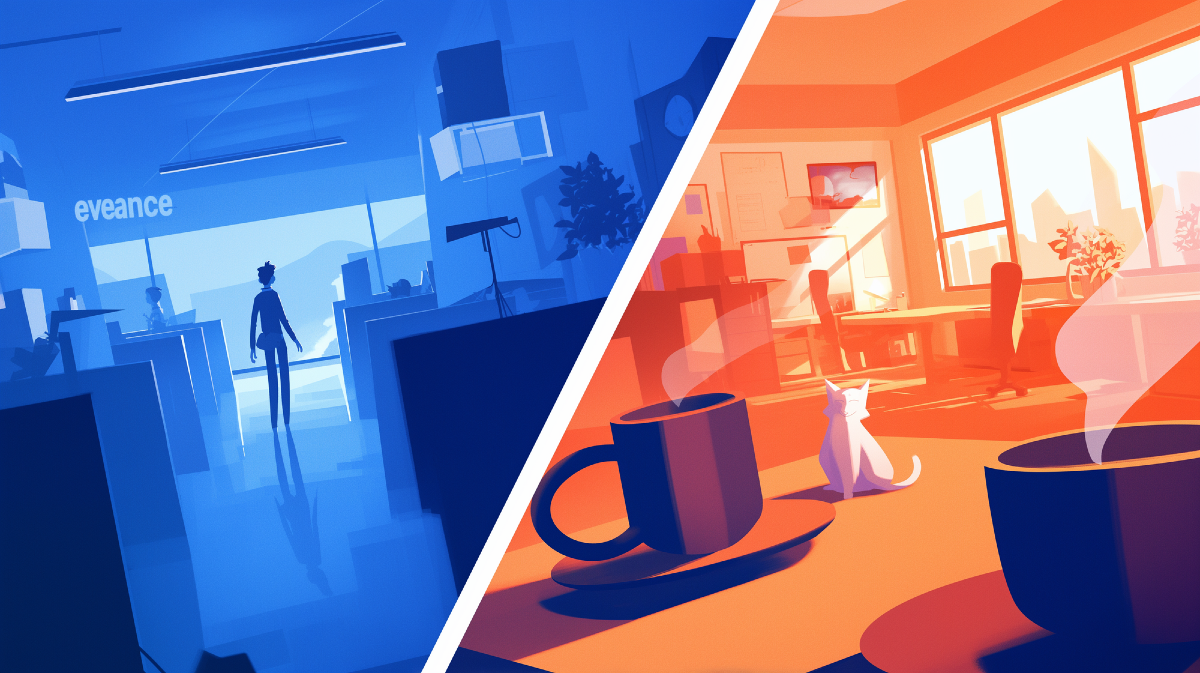
“I’m not a person. I’m just work.” — Severance
There’s this moment in Severance — the show, not your HR status — where a character says something like, “I’m not a person. I’m just work.” And for a lot of us during the pandemic, that hit way too close to home.
We didn’t need chips in our brains. We were already splitting ourselves in two.
Remote work gave us something we’d long asked for: flexibility, focus, and freedom. For a while, it felt like we had finally crossed into a better future — fewer meetings, no commute, and more time with family. We wore sweatpants to team standups. We cooked real meals between deep work blocks. Our “outie” selves got a little more breathing room.
And companies embraced it. Sort of.
They said things like “async by default” and “trust your people.” They bragged about how productive we were, how happy the surveys looked, how this was the future.
Until it wasn’t.
🧠 Control Through Proximity
The truth is, a lot of companies didn’t hate remote because it didn’t work.
They hated it because we did.
Because for the first time in a long time, people were allowed to care about their outies — the part of them that exists outside the meeting calendar, outside the office, outside the brand. We remembered we were people first, workers second.
Return-to-office isn’t about collaboration. It’s about confinement. It’s about placing you back in the environment where your work self — your innie — is easier to monitor, influence, and shape.
Proximity is power. Location is control. It’s the same reason Lumon puts the chip in your head and keeps you on-site. Because autonomy is hard to enforce when you’re out of range.
🙋 My Pandemic Didn’t Feel Like Severance — It Felt Like Freedom
Even with the anxiety of the pandemic, I remember feeling this wave of unexpected happiness.
No more 4:30 a.m. alarms. No more commuter rail and two subway transfers. No more junk food lunches or regular takeout just to survive a long day away from home. I dropped 5–10 pounds almost immediately — and not from stress, but from simply living more intentionally.
I got to see my wife more. We’d take breaks together, have real conversations — better than Slacking with the person sitting next to me ever was.
And I was productive. So productive. I could throw in a load of laundry on the way to the bathroom. Knock out dishes on my lunch break. Get back hours of focus time with fewer interruptions, no room-hopping, no frantic scrambles for a quiet space. I slept more. I delivered more. I felt human again.
Remote work, both as an individual contributor and a manager, meant sanity for me.
That’s why I negotiated it into my employment agreement. When the RTO push started creeping in, I asked for — and got — an exception. I’m now fully remote, and it’s become essential not just to how I work, but how I live. It gives me the space I need to succeed at both.
🧍♂️They Said No, Until They Had No Choice
The irony? Before the pandemic, engineers had been asking for remote flexibility for years. Leadership shut it down every time.
At one point, the COO explicitly stated that we’d get one remote day per week, and that no one was to bring it up again. They were adamant: proximity was the key to success. All the usual talking points.
Then the pandemic hit.
Suddenly, everyone had to go remote. And the results? Better productivity. Better numbers. Happier employees. It worked — objectively.
Yes, some people struggled without the office’s social outlet, but that wasn’t remote’s fault. That was the pandemic. Remote life without the trauma and isolation? That’s the dream. That’s what gives power back to the people.
No office snack bar or gift bag will ever match the value of getting your life back.
Integration, Not Severance
We don’t want to live split lives anymore. We want one integrated, intentional life. We want to be trusted — not tracked.
People aren’t “resources.” They’re not “headcount.” They’re not part of your RTO compliance goal.
They’re people — people who showed up during one of the hardest chapters in modern history.
For your company.
For their teams.
For themselves.
They adapted. They delivered. They redefined what success could look like. Not from a desk. Not under a badge scanner. But from their homes, their lives, their full selves.
Maybe it’s time we stopped severing that part of the story.
Maybe it’s time we built a future of work that remembers the whole person — not just the version that fits neatly into an office chair.
Because once we’ve seen the other side…
We’re not going back to Lumon.