The Many Faces of Power: A Field Guide to Leaders Who Rise, Rule, and Ruin
Watching today’s world stage made me reflect on the leaders I’ve worked with up close. Not emperors or generals, but executives, managers, and founders. Different scale, same patterns. This is a field guide to leadership archetypes that rise in uncertainty and what they quietly cost us.
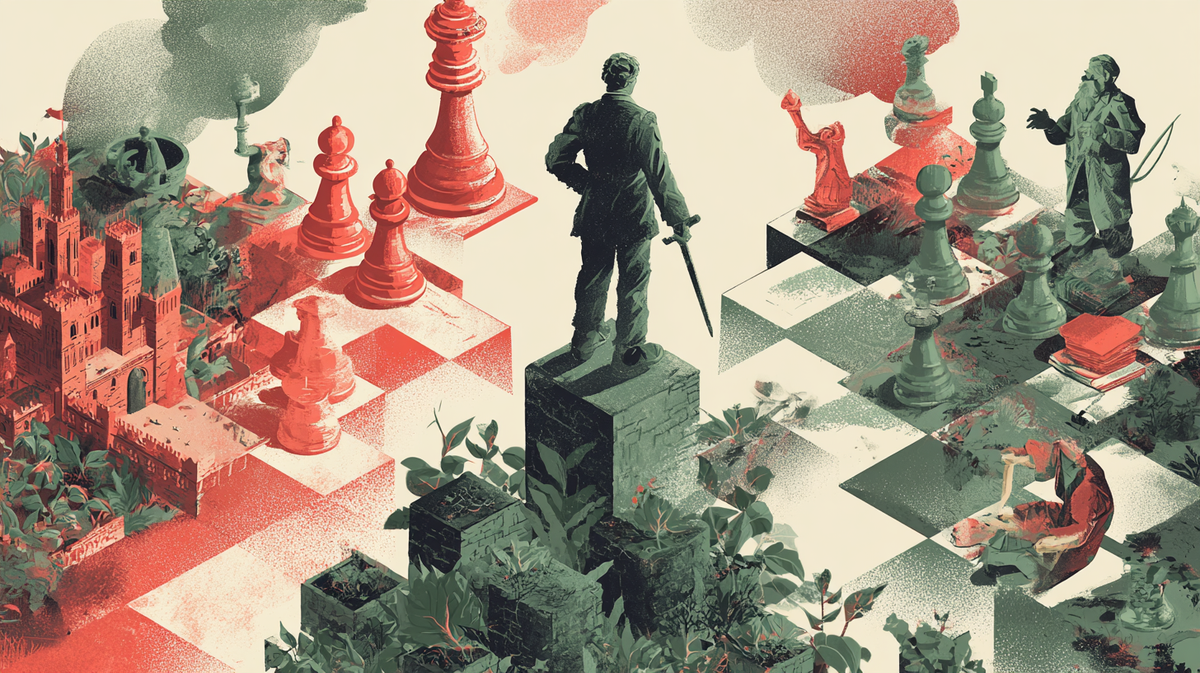
🌍 Every few decades, history gets loud.
Borders shift. Flags move. Leaders pound podiums. Nations are “liberated,” “reclaimed,” or “defended” with tanks, slogans, and televised certainty. And once again, we’re watching the familiar arc play out: the rise of authority, the consolidation of power, and the slow erosion of accountability.
What’s striking isn’t how new this feels.
It’s how familiar.
Watching today’s world stage made me think about the leaders I’ve encountered much closer to home. Not emperors or generals, but executives, managers, founders, and figureheads. Different scale. Same patterns.
Power, it turns out, rhymes.
This isn’t a geopolitical analysis. It’s a field guide. A catalog of leadership archetypes I’ve seen repeat themselves across organizations, teams, and products. Each one can build something. Each one can quietly dismantle it.
💪 The Strongman
Rules by force. Thrives on fear. Mistakes control for competence.
I’ve never worked for a full-time Strongman. But I’ve watched leaders slip into Strongman mode when things get rough.
It usually starts after a public failure. Or after leadership gets called out. Or when uncertainty lingers too long and discomfort sets in. Suddenly, trust evaporates. Decisions centralize. Autonomy shrinks. Micromanagement arrives wearing the costume of “alignment.”
This is where potentially good leaders go wrong.
Instead of investing in people for the long term, they clamp down for short-term reassurance. They mistake tighter control for better leadership, not realizing they’re robbing the team of growth in the process.
This is how you end up with backend engineers turned managers telling UI or UX engineers to solve problems with iframes.
The upside:
- ⚡ Fast decisions
- 🧱 Clear authority
- 🧘 Temporary calm
The cost:
- 🌱 Team growth stalls
- 🧩 Ownership disappears
- 💡 Innovation suffocates
Strongman leadership doesn’t create resilient teams. It creates fragile ones that can only function under supervision.
🏰 The Empire Builder
Expands relentlessly. Confuses possibility with priority.
I’m dealing with this one right now.
Empire Builders lose focus, and that lack of focus spills directly into the product. What starts as a clear, functional system slowly gets buried under layers of “what ifs” and “it would be amazing ifs.”
The problem isn’t ambition. It’s dilution.
A product designed as a framework for simpler, faster delivery becomes bloated with speculative futures. The core goal gets glossed over in favor of potential scale. Everything is important, so nothing is essential.
Empire Builders are often praised early. Look how much they’ve taken on. Look how many things they’re enabling. But expansion without restraint introduces complexity faster than teams can metabolize it.
The upside:
- 🌍 Big vision
- 📣 Broad influence
- 🚀 Perceived momentum
The cost:
- 🎯 Loss of clarity
- 🧠 Product sprawl
- 🔧 Teams servicing ideas instead of outcomes
Empires rarely collapse because they lack ambition. They collapse because ambition outpaces intention.
🦸 The Savior
Means well. Leaves chaos behind.
Our team owns a graveyard of features and products that were built and quietly handed to us by Saviors.
Truly with good intentions.
Someone outside the team or outside engineering saw a problem and decided to help by solving it themselves. The result lands in our lap without context, without documentation, and without the understanding that comes from having built it.
And now it’s ours.
It’s painful when a customer or stakeholder asks a question about something you technically own, only for you to realize no one on the team knows how or why it works.
The Savior believes doing the work for you is helping. In reality, they strip the team of learning, ownership, and confidence.
The upside:
- 🛟 Short-term relief
- ✔️ Problems appear “handled”
- 🙏 Gratitude in the moment
The cost:
- 🧨 Long-term confusion
- 🧾 Hidden maintenance debt
- 🧱 Teams accountable for things they never chose
Help that bypasses ownership isn’t help. It’s deferred pain.
🗂️ The Bureaucrat
Enforces process. Avoids decisions. Preserves the system at all costs.
I’ve worked under Bureaucrats, but it took a while to recognize them.
They don’t make strong decisions. They follow process religiously. They talk to everyone. They empathize endlessly. And yet, nothing ever seems to finish.
We’re six years into migrating to a new authentication solution.
Three years to achieve continuous deployment.
A year for basic Terraform boilerplate.
Four years trying to shed products we never built but still babysit.
And nothing sticks.
Bureaucrats have deep empathy for other Bureaucrats, which means accountability quietly evaporates. Delay becomes understandable. Inertia becomes acceptable. Process replaces progress.
The upside:
- 📋 Predictability
- 🤝 Reduced conflict
- 🧩 Comfort in structure
The cost:
- 🐢 Chronic stagnation
- 😮💨 Exhausted teams
- 🏛️ A system optimized for self-preservation
Bureaucracy doesn’t fail loudly. It fails slowly, while everyone nods in agreement.
🌱 The Steward
Builds people. Thinks in systems. Optimizes for what lasts.
These are always the best leaders to work with.
They’re the growth leaders who teach you how to think, not just what to do.
The engineering leaders who give you resources, examples, and space to write better code.
The product leaders who ask for your ideas instead of handing you answers.
The executives who sit with you at lunch, less than a year into your tenure, to ask what you think about the company’s direction.
Stewards treat power as something temporary and borrowed. Their success is measured by what still works when they’re not there.
The upside:
- 🤍 Trust
- 🌿 Sustainable growth
- 🔁 Adaptive teams
The trade-off:
- 🐢 Less spectacle
- 🕰️ Slower praise cycles
- 🧘 Requires patience
Stewards don’t dominate. They cultivate.
🔍 The Pattern Beneath the Patterns
Here’s the pattern I can’t unsee anymore:
Authoritarian leadership doesn’t start with villains. It starts with fear, impatience, and systems that reward control over clarity.
These archetypes don’t just exist on the world stage. They emerge anywhere uncertainty meets power.
The real question isn’t which leaders are dangerous.
It’s which environments make them inevitable.
🛡️ The Kind of Power Worth Defending
Power itself isn’t the problem.
Unexamined power is.
The leaders worth following don’t promise domination or endless expansion. They invest in people. They protect focus. They build systems that survive scrutiny and change.
History keeps teaching this lesson.
We just keep pretending it’s new.