You’re Not Batman. You Just Think You Are. 🦇
We all know the difference between a hero and a villain in the movies. So why do we stop applying that lens the second we get a title and a headcount?
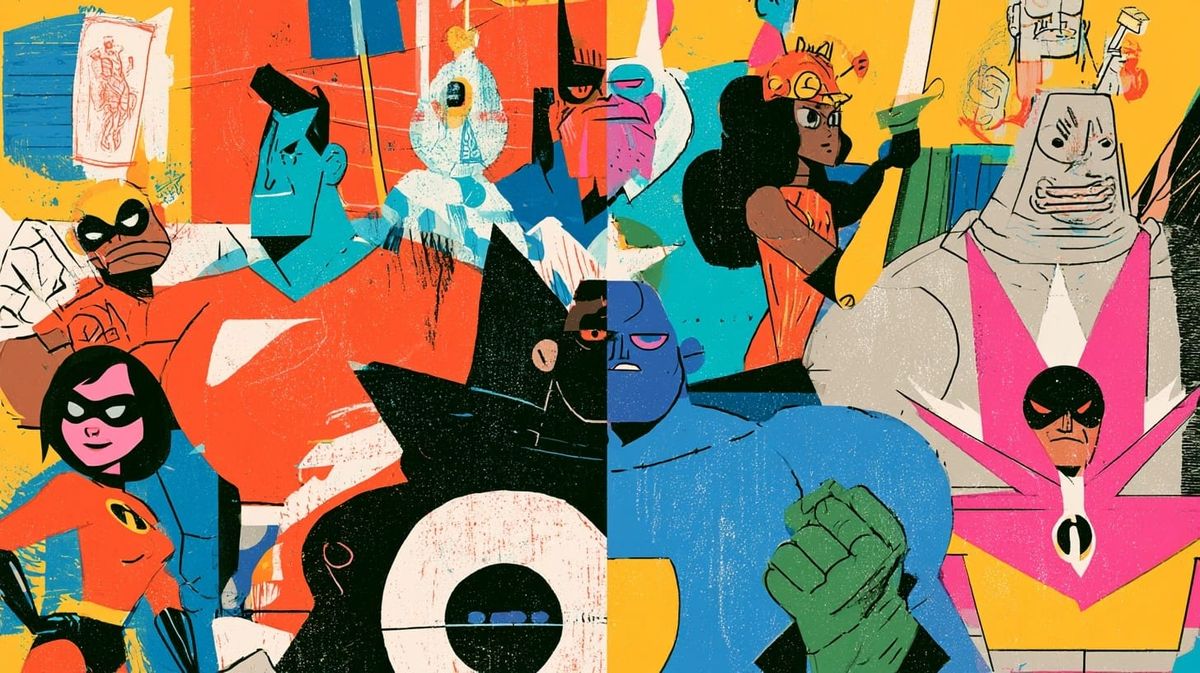
Raising my kids, I've caught myself asking the same question over and over: was that something a hero would do, or a villain? Turns out the framework doesn't retire when they turn 18. It just gets more expensive.
We all carry an intuitive alignment chart. We know the archetypes — the motivations, the tells, the way power gets used versus abused. We just stop applying that lens to ourselves the second we get a title, a headcount, or a budget to protect.
So let's apply it. Using recent movies — James Gunn's Superman, Spider-Man: Brand New Day, and The Dark Knight — as the reference set, here's the alignment chart. And here's what each archetype looks like the moment it shows up in an engineering org.
Superman = The leader with the most power who spends the least of it on himself
Spider-Man = The senior IC who could cash out and doesn't
Lex Luthor = The exec who mistakes his own insecurity for a business problem
Joker = The critic who's right about the rot and wrong about the cure
Batman = The leader with the resources to fix the system who builds a punishment machine instead
Punisher = The leader who thinks fear is a management strategy
🦸 The Heroes
Superman
He's the illegal alien who owes humanity nothing and gives it everything anyway. All the power in the room, and he uses it to protect people who can't protect themselves — including, when it counts, at his own expense.
In engineering leadership terms: this is the manager or staff engineer who has enough market pull to walk into any company and double their comp tomorrow — and instead stays, takes the blame in the incident review, gives the credit in the promo packet, and spends political capital protecting the team from a reorg instead of protecting their own seat.
What it looks like:
🦸 Publicly owns the outage their report caused
🦸 Pushes back on leadership before the bad decision ships, not after, in the retro, safely
🦸 Turns down the easy win if it means throwing a junior under the bus
The upside: trust compounds. People take real risks under a leader like this because they know who's standing behind them when it goes wrong.
The tension: it's exhausting, and it doesn't scale past a certain team size without a system behind it. Superman can't be everywhere. Eventually the behavior has to become policy, or it dies with the person.
Spider-Man
He's your friendly neighborhood hero — enough talent and intellect to found something huge, and he spends it on the block instead.
In engineering terms: the senior engineer who's turned down the startup founder pitch, the staff-plus title elsewhere, the easier lane — because the unglamorous work of unblocking juniors, fixing the CI pipeline nobody owns, and being in the trenches actually matters more to them than the exit.
What it looks like:
🕸️ Takes the on-call shift nobody wants without making it a whole thing
🕸️ Reviews the messy PR from the new hire instead of routing it to someone junior
🕸️ Says no to the flashy cross-team project to keep the lights on for their own team
The upside: institutional knowledge and trust that no amount of hiring can buy.
The tension: Brand New Day is honest about this — the guy's broke, exhausted, and taken for granted. Selflessness without boundaries isn't heroism. It's a burnout story with better PR.
🦹 The Villains
Lex Luthor
The narcissistic megalomaniac who'd sacrifice the world to erase anyone who makes him feel small. Not driven by ideology. Driven by ego wearing ideology as a costume.
In engineering terms: watch for the exec who identifies a specific group — remote workers, a particular team, "legacy" engineers, whoever — as the actual obstacle to the business, and spends real organizational capital on eliminating them rather than examining the strategy that put the company here. The tell isn't the org chart change. It's that the framing always centers his own diminished importance, and the "efficiency" argument only ever seems to point at the people he resents.
What it looks like:
🦹 Reorgs that conveniently route around the people who challenged him in a meeting
🦹 "Data-driven" cuts that never touch his own pet initiatives
🦹 Talks about the business; means himself
The danger: it's dressed as strategy, so the board approves it and the org absorbs it as normal. Nobody calls it what it is until the good people are already gone.
The Joker
The prince of chaos, the spirit of anarchy, and — this is what makes him dangerous instead of just crazy — often right. The hypocrisy he's pointing at is usually real. It's the response that's sociopathic.
In engineering terms: this is the leader or loud voice in the org who correctly diagnoses that the promo process is theater, that the values deck is fiction, that leadership says one thing and comps another — and whose answer is to burn trust to the ground rather than build something that works. Scorched earth, dressed up as truth-telling.
What it looks like:
🃏 "I'm just being honest" as cover for cruelty
🃏 Correct diagnosis, deliberately destructive prescription
🃏 Treats every retro as an opportunity for a body count
The danger: because the diagnosis is real, people mistake the arson for courage. It isn't. Naming the rot is necessary. Torching the building because the rot exists is just chaos with better talking points.
🎭 The Anti-Heroes (Watch These Ones Closest)
This is the dangerous middle. People who believe they're heroes, and rationalize the villain's methods as the necessary cost.
Batman
Looks like a hero. Isn't quite. Instead of using the wealth and tech to fix Gotham's actual systemic rot — housing, policing, the courts — he builds a private enforcement apparatus and appoints himself judge, jury, and punisher of individuals while the system that produced them stays untouched.
In engineering terms: the leader who has every resource to fix the system — better onboarding, real investment in growth, a functioning performance process — and instead builds a personal accountability machine. Surprise PIPs. Quiet blacklists. Playing judge and jury on individual "bad actors" in one-on-ones instead of fixing the broken process that keeps producing them.
What it looks like:
🦇 Punishes the symptom, ignores the system every time
🦇 Operates outside the process because he trusts his own judgment more than the process
🦇 Calls it justice; it's mostly control
The tension: he gets results. Gotham's crime rate does drop in the trilogy. But it's fragile, personality-dependent, and it never survives him leaving the building.
Punisher
Also driven by justice. Uses an arsenal instead of a process. A real hero doesn't turn the neighborhood into a war zone to keep it safe — doesn't use violence, public humiliation, or fear to enforce peace.
In engineering terms: the leader who believes fear is a legitimate management tool. Public callouts in all-hands as "accountability." Making an example out of someone in a 1:1 that somehow everyone hears about by lunch. Convinced the ends — a "high bar" — justify methods that would get anyone else fired.
What it looks like:
💀 "Accountability" that only ever flows downward
💀 Uses fear where trust would actually work
💀 Confuses being feared with being respected
The danger: it works, briefly, the same way a scorched field is briefly weed-free. Then nothing grows there again for a long time.
Final Thought 💭
So here's the actual question, the one under the alignment chart: when you decide how you're going to use the power you have — over a report, a reorg, a comp decision, a promotion, a vote — are you asking what a hero would do?
Or have you already decided you're the exception the rule doesn't apply to?
Every leader thinks they're Superman. Most of them are one bad quarter away from finding out they're Luthor.
👀 Your Turn
Which archetype have you actually worked for — not the one on their LinkedIn banner, the real one? And harder question: which one have you been, on your worst week as a leader?


